Showing posts with label benefits. Show all posts

Wednesday, 1 February 2017

Do you colour?


Colour Me Calm – The Benefits of Adult Colouring Books 


So how can they help?

Colouring is Calming

If you feel anxious a lot, colouring can help you feel calmer. When we colour we have to use both the logical left hemisphere (dealing with motor skills and attention) and the creative right, which uses colour, shape, imagery and emotion. If you are stressed, or have anxiety, you may find your body is often on high alert, responding to perceived threats with a fight or flight response. Using both sides of the brain calms the amygdala (the part of the brain that is related to our fear and stress response).

Colouring Helps Define Your Downtime


We all need time to unwind every now and again but, with the technology in our pockets, it can be increasingly difficult to step away from work, news and social updates. Setting aside some time to colour helps us to make sure we have a quality break and defines that time to ourselves and others.

Colouring Can Help You Sleep

The calming effects of colouring have helped many people unwind before bed and sleep better as a result. Good sleep hygiene means turning off electronics an hour or so before we turn in – but without something different to occupy us it can be hard to do. Building a bit of colouring into your evening routine may help you sleep. And if you wake in the night, a bit of gentle colouring can help you stay calm and drift back to sleep, which has to be better than lying awake worrying about not sleeping.

Colouring Moves Focus Away From Thoughts


Some people describe it as almost meditative. When you’re focusing on colouring, you are distracted from those automatic negative thoughts and spirals that many of us are all too familiar with (there’s lots more about how automatic thoughts can make us feel worse on my first Mindfulness Based Cognitive Therapy blog).

Colouring is Easy to Start

Creativity and crafting has lots of benefits for wellbeing – but they can be hard to start – a lot of people feel intimidated because they are ‘not creative people’. A colouring book means you are not staring at a blank page but can have a go quickly and easily.
It’s also easy to start in the moment. Some people have described using colouring to stave off panicky feelings. Unlike some more difficult, messy or technical crafts, the small task of picking up a coloured pencil and applying it to paper may feel manageable, even in times of high stress. And often, once you get started, you start to feel calmer and more able to carry on (some people call this ‘reverse motivation’).

Colouring is a Way Into Creation

Art therapies are a regulated form of therapy to help you understand yourself better. Although colouring isn’t usually part of art therapy, creating your own art can be. And if you’re feeling nervous about getting started, colouring is a good first step. Some colouring books include sections you can fill in yourself to add to the picture. As you get more used to the feel of the pens and brushes and the idea of creating art, you may start to feel more comfortable creating your own pieces.
Finally, there can be a real feeling of pride and achievement when you complete one of these complicated and intricate drawings. You might even like to buy a book with inspirational quotes to colour in so you can hang them up and keep benefitting even after you put the pencils away.
With adult colouring books having gained such popularity, there are books available to suit every taste, from flowers to Harry Potter and even the Great British Bake Off! However, if you’re stuck with where to start, here are 5 of my favourites:
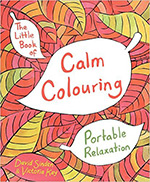
  1. The Little Book of Calm Colouring: Portable Relaxation
    The Little Book of Calm Colouring: Portable Relaxation
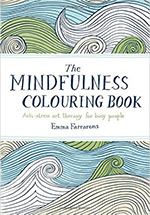
  2. The Mindfulness Colouring Book: Anti-stress art therapy for busy people
    The Mindfulness Colouring Book: Anti-stress art therapy for busy people
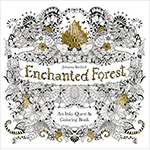
  3. Enchanted Forest: An Inky Quest and Colouring Book
    Enchanted Forest: An Inky Quest and Colouring Book
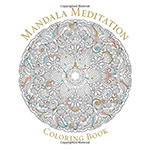
  4. Mandala Meditation Coloring Book (Serene Coloring)
    Mandala Meditation Coloring Book (Serene Coloring)
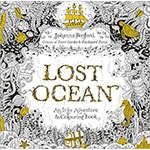
  5. Lost Ocean: An Inky Adventure & Colouring Book
    Lost Ocean: An Inky Adventure & Colouring Book


    Source:  www.centreofexcellence.com

Tuesday, 13 December 2016

The MIND diet


The MIND diet, as the name implies, is designed to promote a healthy mind and lower the risk of Alzheimer's disease. It is a mash-up of the Mediterranean diet and the DASH diet — two diets that have been found to have several health benefits.
MIND stands for Mediterranean-DASH Intervention for Neurodegenerative Delay. It was developed by a nutritional epidemiologist, Martha Clare Morris, at Rush University Medical Center through a study that was funded by the National Institute on Aging. Her goal was to lower the risk of Alzheimer's disease by promoting a diet consisting of brain-healthy foods.
The Mediterranean diet focuses on eating foods that are as natural as possible, while limiting unhealthy fats and red meat. The DASH (Dietary Approaches to Stop Hypertension) diet, as its name suggests, is aimed at helping to ease hypertension. It focuses on helping people to eat foods that can lower their sodium intake and blood pressure. 

Morris told Live Science in a 2015 article that the researchers focused on this mix of two-well-known, healthy diets because it would be easy for Americans to follow. The MIND diet recommends eating 10 foods daily and avoiding five types of foods. The healthy-food group contains:
  1. Vegetables 
  2. Green leafy vegetables in particular
  3. Berries, especially blueberries
  4. Nuts
  5. Beans
  6. Wine
  7. Whole grains
  8. Fish
  9. Poultry
  10. Olive oil 
The five unhealthy foods are: 
  1. Fried or fast food
  2. Red meats
  3. Cheeses
  4. Butter and stick margarine
  5. Pastries and sweets
The rules of the diet are:
  • Get at least three servings of whole grains per day 
  • Eat a salad each day
  • Eat one other vegetable every day 
  • Drink a glass of wine each day 
  • Snack almost every day on nuts 
  • Eat beans every other day 
  • Consume poultry and berries at least twice a week 
  • Consume fish at least once a week
  • Unhealthy foods are allowed, but less than one serving per week, with the exception of butter  
  • Less than 1 tablespoon a day of butter is allowed per day 
The researchers' main goal in creating the MIND diet was to reduce the risk of Alzheimer's disease (AD). According the Alzheimer's Foundation of America, it is estimated that about a half-million Americans younger than age 65 have some form of dementia, including Alzheimer's disease.
Morris and her team conducted studies of the MIND diet for nearly a decade, working with a group of 923 seniors. The results showed that the diet lowered the risk of Alzheimer's by as much as 53 percent in participants who meticulously adhered to the diet. It also helped 35 percent of the seniors who followed the diet moderately well, according to Rush University Medical Center.
The study also found that the longer a person followed the MIND diet, the better protected the individual was from developing Alzheimer's. The results of the study were published in March 2015, in the journal Alzheimer's & Dementia: The Journal of the Alzheimer's Association.
In another study, Morris' team conducted a head-to-head comparison of the MIND diet with the DASH and Mediterranean diets. The results that they obtained with the other two diets were similar to those they found with the MIND diet alone. A high adherence to the diets reduced the risk of Alzheimer's by 39 percent among those who followed the DASH diet and 54 percent among those who followed the Mediterranean diet, according to Rush University Medical Center. However, the participants obtained very little benefit from the two other diets if their adherence to them could be termed moderate rather than strict.
"One of the more exciting things about this is that people who adhered even moderately to the MIND diet had a reduction in their risk for AD," Morris said in a Rush University press release. "I think that will motivate people."
In various studies, the Mediterranean diet and the DASH diet have each been found to have health benefits in other areas as well. For example, people in one study who followed the DASH diet experienced a decrease in their blood sugar levels over a three-month period. Researchers in that study thought that the decrease was due to the higher consumption of probiotics than the diet prescribed. According to the Mayo Clinic, the DASH diet may also help reduce blood pressure by a few points in just two weeks, and systolic blood pressure could be reduced eight to 14 points, over time. 
Another study, which was published in April 2010, found that the Mediterranean diet helped dieters lose weight and lower cholesterol, triglycerides and blood pressure. And a study of 780 male firefighters that was conducted by the Harvard School of Public Health and Cambridge Health Alliance also found that a Mediterranean-style diet was associated with lower risk factors for cardiovascular disease.
Live Science asked Dana Hunnes, senior dietitian at Ronald Reagan UCLA Medical Center and an adjunct assistant professor at the UCLA Fielding School of Public Health, to weigh in on the risks that may be associated with the MIND diet. "The Mediterranean and DASH diets are very healthy diets in general," said Hunnes. "They are extremely high in plant-based foods: fruits, vegetables, plant-based proteins (nuts, seeds, legumes). They are also very high in potassium and magnesium, two electrolytes/minerals we don't typically get enough of through diet.
"When it comes to eating fish and fish products, which the Mediterranean diet recommends more of, we need to be careful about some of the potential pollutants and toxins that end up in fish, including mercury and plastic residues. More and more, plastic residues, BPA — other persistent pollutants including DDT — and mercury are found in fish, Hunnes said. "So, if you eat fish, it's a good idea to aim low in the food chain and look for sustainably fished (line and pole caught) products."
"In general though, these are healthy eating patterns that are high in produce, low in saturated fat and good for human health and even the environment."
As with any diet, consult with a doctor before starting any new diet plan.

Source: Alina Bradford - www.livescience.com